

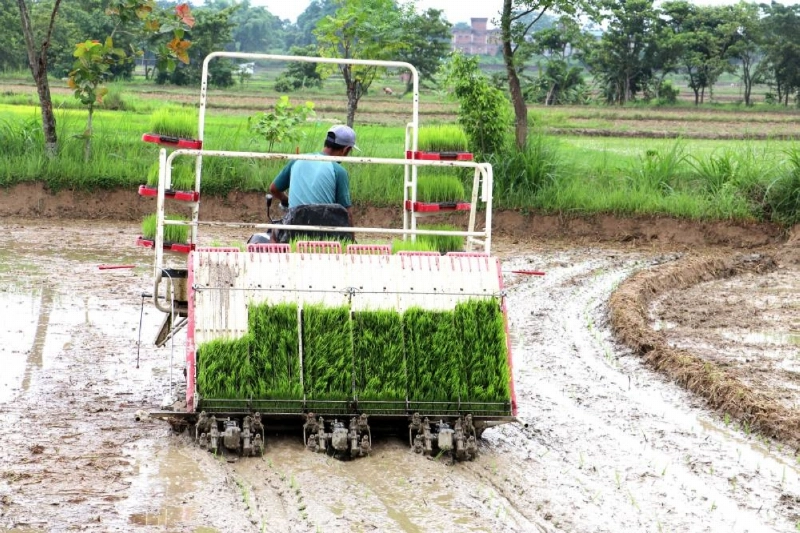
Paddy transplantation across Nepal has reached only 32.38 percent this season, compared to 45 percent during the same period last year, as delayed monsoon rainfall and shifting weather patterns continue to disrupt the country’s rice planting schedule.
KATHMANDU, JULY 7
Paddy transplantation across the country has declined by 12.62 percentage points compared to the corresponding period last year, sparking concerns about this year’s rice harvest, particularly in Nepal’s major grain-producing regions.
According to the Department of Agriculture, paddy has been transplanted on 443,595 hectares of land as of Monday, representing 32.38 percent of the country’s more than 1.3 million hectares of cultivable paddy fields. During the same period last year, transplantation had already reached 45 percent of the total cultivable area.
Among the provinces, Sudurpashchim has achieved the highest transplantation rate at 57.9 percent. It is followed by Gandaki with 41 percent, Karnali with 40.5 percent, Lumbini at 37.3 percent, Bagmati at 33.2 percent, Koshi at 31.5 percent, while Madhesh remains at the bottom with only 15 percent of its paddy fields planted.
Prakash Kumar Sanjel, Director General of the Department of Agriculture, said the slow pace of plantation is mainly the result of the delayed arrival and uneven distribution of monsoon rainfall. He noted that changing climatic conditions have disrupted the usual planting calendar but expressed optimism that transplantation activities would gain momentum once rainfall becomes more consistent across the country.
The most alarming situation has emerged in Madhesh Province, Nepal’s largest rice-producing region, where only around 15.6 percent of paddy fields have been transplanted so far. The province contributes nearly 70 percent of the nation’s total rice production, while the remaining 30 percent comes from the country’s hilly regions.
Agriculture specialists have cautioned that if monsoon rainfall does not improve in the coming days, the continued delay in paddy transplantation could have a significant impact on this year’s overall rice production.
सम्बन्धित खवर